
Granville County Probate Record Office
North Carolina probate is handled by the Clerk of Superior Court, not by a separate county probate court. The North Carolina Judicial Branch estates topic says the elected Clerk of Superior Court in each county acts as the probate judge. In Granville County, probate and estate matters go through the Clerk of Superior Court at Granville County Courthouse, 101 Main Street, Oxford, NC 27565. The clerk's phone number is 919-690-4800.
That structure affects every Granville County probate record request. Estate filings, filed wills, letters, inventories, accountings, small-estate options, year's allowance, and related orders are clerk records. Guardianship and incompetency proceedings are related special proceedings before the clerk, but they can include private personal and medical facts. A probate search should therefore separate public estate-file access from restricted guardianship or mental-health material.
The manifest image for estate administration comes from the NC Courts estates help topic.
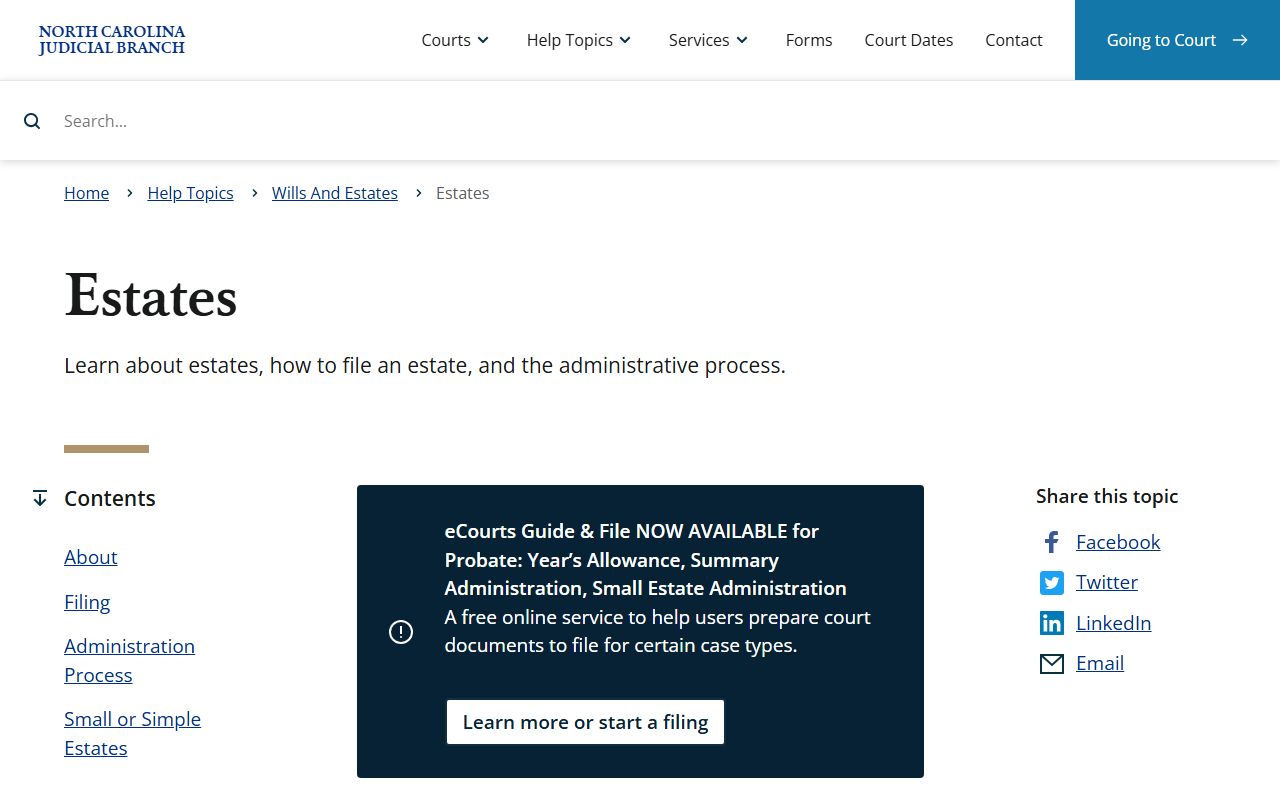
The state estates source is central to Granville County probate records because it confirms the clerk's probate role and the basic estate-filing path.
Granville County Probate Terms
Probate records use terms that are easy to misread. The definitions below match the types of estate, will, and guardianship records identified in the research. They also help distinguish a public estate file from a special proceeding with privacy limits.
- Testator
- The person who made a will.
- Executor
- A person named in a will to carry out estate administration after court authority is issued.
- Intestate
- A death without a valid will, which can require administration under North Carolina estate rules.
- Guardianship
- A clerk-supervised proceeding about authority to act for an adult found incompetent or for a minor.
- Conservatorship
- A term often used for financial management authority; North Carolina research here focused on guardianship and clerk special proceedings.
- Letters testamentary or administration
- Authority documents issued to a personal representative in an estate file.
Start Granville County Estate Probate
Official estate filing facts from the research identify the first documents and venue rules. A will becomes public record when filed with the clerk after death. Any person may view or request a copy of a filed will for a fee. To begin estate administration, bring the will if any, a certified death certificate, the application and preliminary inventory, and the filing fee. For a North Carolina resident, venue is the county where the decedent was domiciled at death. For a nonresident, venue can be a North Carolina county where the decedent left property or where estate property came.
Guide & File is available for Probate: Year's Allowance, Summary Administration, and Small Estate Administration. Those options do not erase the clerk's role. They help users prepare filings for selected probate matters. Mail or phone requests should be checked with the Clerk of Superior Court before sending estate-copy requests or probate filings, because the exact file status and copy need may vary by estate.
- Confirm that Granville County is the correct venue based on domicile or estate property.
- Gather the will if one exists, a certified death certificate, application materials, and preliminary inventory.
- Contact the Clerk of Superior Court before mailing filings or copy requests.
- Use Guide & File only for supported options such as year's allowance, summary administration, or small estate administration.
- Request certified copies from the clerk in the county where the estate is filed.
Search Granville County Probate Records
Granville County probate access uses several channels. Online case information may appear through Portal Smart Search where estates or special proceedings are public and available. Civil, special proceeding, and estates information can also be accessed at public self-service terminals in clerk offices. For the actual court file, filed will, certified copy, or older estate materials, the practical source is the Granville County Clerk of Superior Court.
Older estate files should be requested from the clerk. Very old or historical material may require archives or genealogy routing, especially when the file is no longer in routine clerk storage. The NC Judgment Search page was assigned in the manifest but failed image capture, so no image is used for that source. The access channel still matters where judgments, liens, or estate-related court entries overlap with probate research.
| Access Channel | Use It For | Limits |
|---|---|---|
| NC eCourts Portal Smart Search | Public case information for estates or special proceedings when available | May not show full documents or restricted details |
| Public self-service terminal | Civil, special proceeding, and estate information in clerk offices | Printing fees may apply |
| Clerk of Superior Court | Filed wills, estate files, certified copies, and probate filing questions | Call before mailing requests |
| Archives or genealogy routing | Very old estate files or historical materials | Needed only when the clerk routes older material outside routine access |
Granville County Probate Contact
Because the Clerk of Superior Court acts as ex officio Judge of Probate, Granville County has one main probate contact for estate filings and estate-file copies. The same courthouse also houses other court offices and the Register of Deeds, so record type matters before visiting. Probate, estates, guardianship, and special proceedings route to the clerk. Marriage certificates and deeds route to the Register of Deeds.
Granville County Clerk of Superior Court
Clerk of Superior Court acting as ex officio Judge of Probate
Granville County Courthouse
101 Main Street
Oxford, NC 27565
919-690-4800
Monday-Friday, 8:30 a.m. to 5:00 p.m.
Granville County Probate Fees
The research identified estate and guardianship filing fees from official sources. The estate filing fee is $120. Guardianship fees identified in the research are a $120 filing fee plus a $30 sheriff service fee. Other copy charges or estate-specific costs should be verified with the clerk or the current court costs publication because the research did not capture every possible probate copy or certification fee.
| Probate or Special Proceeding Item | Amount or Detail |
|---|---|
| Estate filing fee | $120 |
| Guardianship filing fee | $120 |
| Guardianship sheriff service fee | $30 |
| Filed will copy | Available for a fee from the clerk after filing |
| Certified estate copies | Request from the clerk in the county where the estate is filed |
The fee source appears in the manifest from the Current Court Costs publication page.
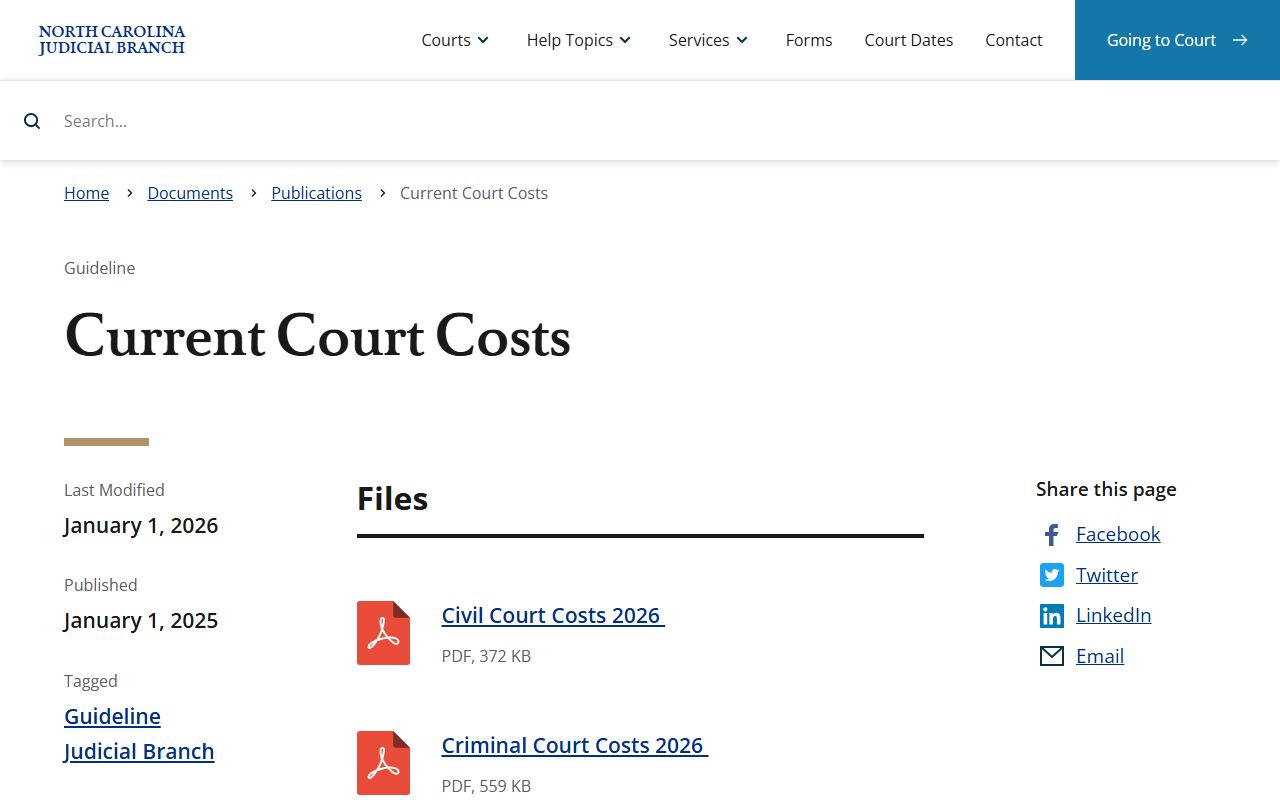
The current costs source should be checked when a Granville County probate request involves a filing, service fee, copy, or certification not listed in the research inventory.
What Granville County Probate Records Show
The research did not include a viewable sample probate record, so sample data should not be invented. It did capture a typical public probate field inventory. A public estate file may identify the estate name or decedent name, file number, date opened, county and clerk, applicant or personal representative, whether a will was filed, date of death, type of administration, inventory filings, accountings, orders, letters, creditor notices, deadlines, caveat or contested-will filings if any, fees, and costs.
Those fields can answer practical questions. They can show whether the estate is a full estate, small estate, summary administration, or year's allowance. They can show whether the inventory or accountings were filed. They can identify letters issued to a representative. They can also show contested filings when a caveat challenges a will. Documents, redactions, and certified-copy availability remain controlled by the clerk and any privacy rule that applies.
| Field | What It Shows |
|---|---|
| Estate or decedent name | The name used to identify the probate file |
| File number | The clerk's official probate or special proceeding identifier |
| Date opened | When the estate file began |
| Applicant or representative | The person seeking or holding authority in the estate |
| Will filed | Whether a will is part of the clerk file |
| Type of administration | Full estate, small estate, summary administration, or year's allowance |
| Orders or letters issued | Authority and court directions issued by the clerk |
| Creditor notice | Notice and deadline information tied to estate claims |
Granville County Probate Guardianship Limits
Guardianship and incompetency proceedings are special proceedings before the clerk. The research notes that adult incompetency petitions are filed in the special proceedings division of the clerk in the county where the respondent resides, is domiciled, or is an inpatient in a qualifying treatment facility. Any person may file, including a relative, friend, medical provider, or authorized state or local human services representative.
Required guardianship information can include respondent identifying information, residence for the past 12 months, facts showing alleged incompetence, next of kin and interested persons, assets, liabilities, income, ability to manage daily life, and an optional recommended guardian. Hearing timing is generally 10 to 30 days after personal service. An interim guardian hearing is held as soon as possible and no later than 15 days after service of the motion or notice. These records can contain sensitive details, so access should be confirmed through the clerk.
The guardianship manifest image comes from the NC Courts guardianship help topic.
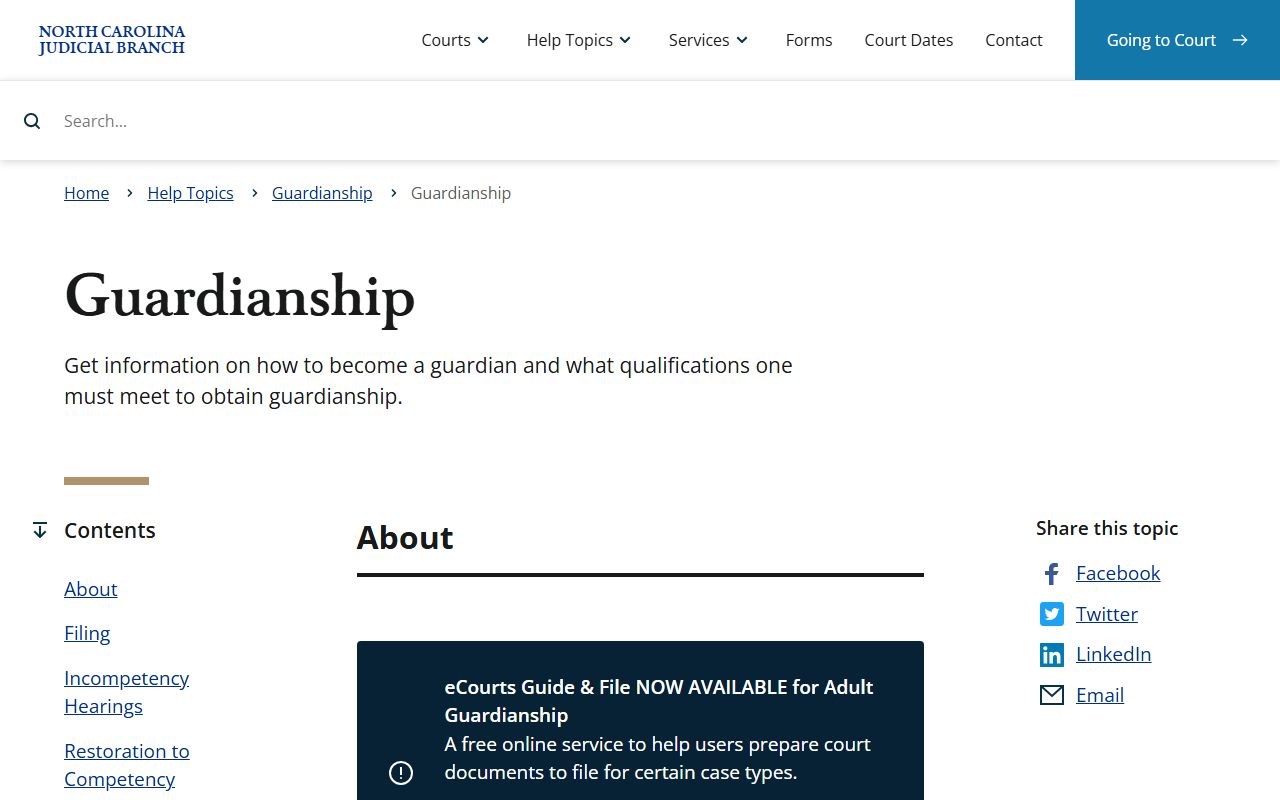
That source supports the caution used for Granville County probate records that involve adult incompetency, minor guardianship, assets, and personal capacity facts.
Note: Estate files may be public in part, but guardianship and incompetency records can include restricted personal information.