
Granville County Arrest Records and Charges
Arrest records in Granville County begin with the agency that made the arrest, such as the Granville County Sheriff's Office, Oxford Police Department, Creedmoor Police Department, or Butner Public Safety. A booking or custody record can show that a person was taken into custody, but it is not the same as the court charge record. The official research found no county-hosted public jail roster, so current custody questions should start with the Detention Center or the Sheriff's Office rather than a promised online mugshot list.
The court charge record starts once a criminal accusation enters the court system. In Granville County, the District Attorney for Prosecutorial District 11 prosecutes state criminal cases and decides how charges move after arrest or citation. The charge can be filed by warrant, citation, criminal summons, information, or indictment, then tracked through the Clerk of Superior Court and the statewide eCourts Portal. The full case file and sentence history belong with Granville County criminal court records, while custody details belong with Granville County inmate records.
The Granville County Sheriff's Office page is the official county source for sheriff contact details and public safety links.
Sheriff contact channels matter because arrest records can begin outside the courthouse before the charge appears in a case search.
Search Granville County Charge Records
Granville County does not run a separate local court-charge database. Online court access runs through the NC eCourts Portal, where Smart Search can show public case information and Search Hearings can show court dates. Portal is a first-look tool. It does not replace the Clerk of Superior Court for complete files, certified copies, older paper records, or certified county criminal record checks. For a formal single-county background search, North Carolina Judicial Branch guidance points users to the clerk's office and form AOC-CR-314, not to Portal.
- Open Portal and use Smart Search for case information tied to a defendant name, business name, or case number.
- Filter by location when possible so the search focuses on Granville County rather than all North Carolina counties.
- Open the case result and review the charge list, offense date, charge class, warrant or citation number, and case status when public.
- Use Search Hearings to confirm court dates by party name, case number, attorney, judicial officer, or courtroom.
- Contact the Clerk of Superior Court when the online result is unclear, restricted, older, or needed as a certified copy.
Portal can also expose fields that are useful after an arrest, such as SO number, booking number, case type, case status, and file-date filters. Those fields do not prove that Granville publishes a jail roster. They only mean the statewide court interface can accept those identifiers when they are part of a court record. For current custody, use the Detention Center phone line. For state prison, probation, or parole, use the North Carolina Department of Adult Correction system instead of a county jail search.
| Access Channel | Best Use | Granville County Limit |
|---|---|---|
| NC eCourts Portal Smart Search | Public case and charge information | Not a certified background check |
| Clerk of Superior Court | Complete file, certified copies, county criminal search | Call before mailing requests |
| Sheriff or police agency | Arrest, incident, custody, and agency records | Active investigations may be restricted |
| NCDAC offender search | State prison, probation, parole records | Does not include county jail inmates |
| County public-records form | County administrative or agency records | Does not create records that do not exist |
Granville County Charging Documents
Charges after arrest are not final proof of guilt. They are formal accusations that begin or shape the criminal case. A misdemeanor may start in District Court. A felony can move into Superior Court, and a grand jury indictment can replace or supersede an earlier charge. The Clerk of Superior Court keeps court records once the case opens, while the District Attorney represents the State and decides whether the charge proceeds, changes, or ends in dismissal.
| Document | Who Usually Starts It | How It Fits Granville Cases |
|---|---|---|
| Complaint or warrant | Law enforcement or judicial official | Can begin a criminal case after probable cause is found. |
| Information | Prosecutor | Can state charges the prosecutor elects to pursue. |
| Indictment | Grand jury | Common in felony Superior Court practice and may replace earlier charging papers. |
The Oxford Police Department page is one local law enforcement source for agency contacts and public safety routing.
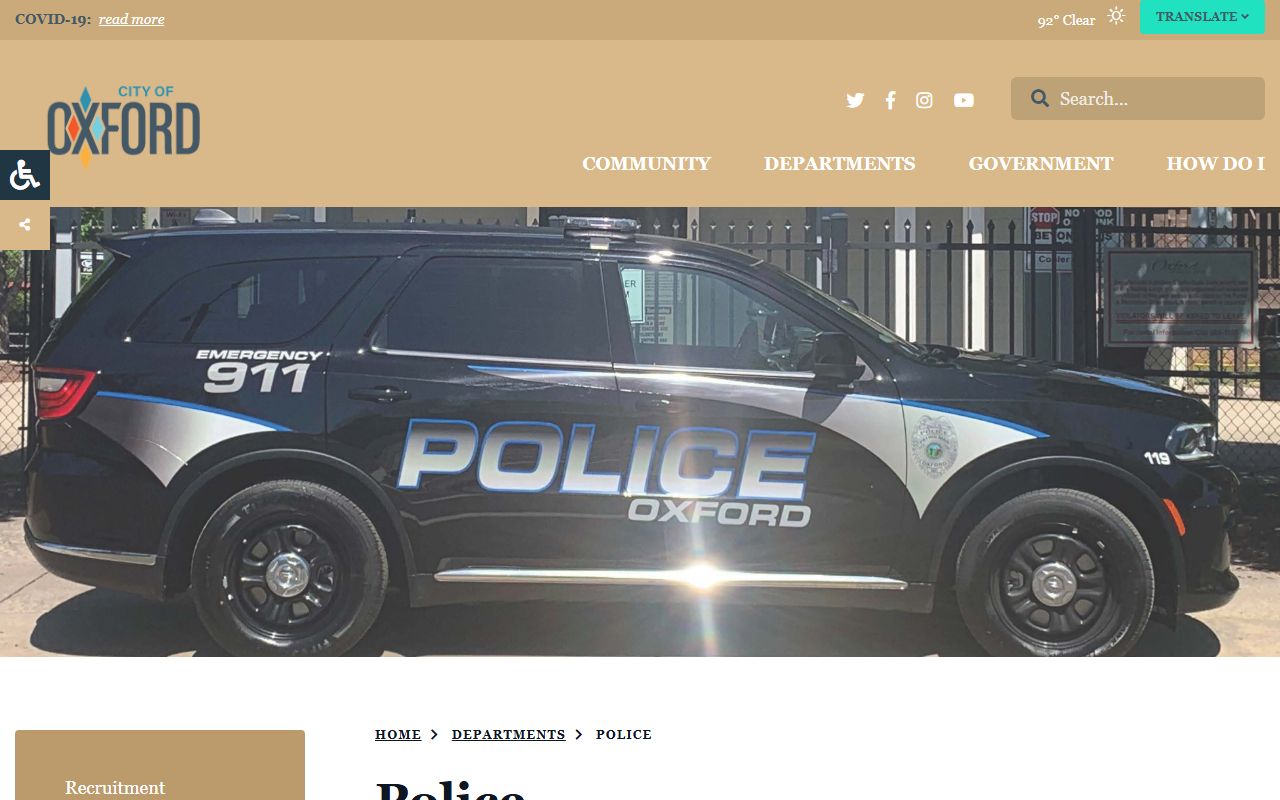
Local police records and court charge records can overlap, but they are kept by different offices and follow different access rules.
Granville County Charge Status
A Granville County charge can change many times before a case ends. The first charge may be amended, reduced, dismissed, superseded by indictment, or resolved by plea or trial. A Portal entry may show a charge as pending or disposed, but the clerk's file is the better source when the current status matters for court, employment screening, licensing, or an attorney review. A single arrest can also create several counts, each with its own result.
| Status | What It Means | Where to Confirm |
|---|---|---|
| Pending | The accusation remains open and has not reached final disposition. | Portal hearing search and the Clerk of Superior Court. |
| Amended or reduced | The prosecutor or court record reflects a changed offense or lower charge class. | Case docket entries and judgment papers. |
| Dismissed | The charge ended without a conviction on that count. | Disposition entry or dismissal document. |
| Superseded | A later indictment or charging paper replaced an earlier accusation. | Superior Court file and DA docket activity. |
| Disposed | The charge has a recorded outcome, such as plea, verdict, dismissal, or other final action. | Judgment, disposition, or clerk copy. |
Note: A dismissed charge can still appear in some court histories unless it is sealed, expunged, or otherwise restricted by law.
Granville County Charges vs Convictions
Being charged is different from being convicted. A charge means the State has accused a person of an offense. A conviction means guilt was found by plea or verdict. Granville County court charge records are useful because they show what was filed and how each count moved, but the outcome must be read from the disposition, judgment, sentence, and docket entries. This distinction is vital when reading arrest records, employer screens, landlord screens, or informal internet summaries.
| Point of Comparison | Charge | Conviction |
|---|---|---|
| Legal meaning | An accusation filed in court or by lawful process. | A finding or admission of guilt. |
| Record location | Charging document, docket, warrant, citation, or indictment. | Judgment, plea, verdict, sentence, and disposition entries. |
| Can change | Yes, charges may be amended, reduced, added, or dismissed. | Yes, but changes usually require later court action or appeal. |
| Best confirmation | Clerk file and Portal case record. | Certified judgment or clerk-certified criminal search. |
The Granville County Detention Center page explains that the jail houses inmates until they are tried and a disposition is made.
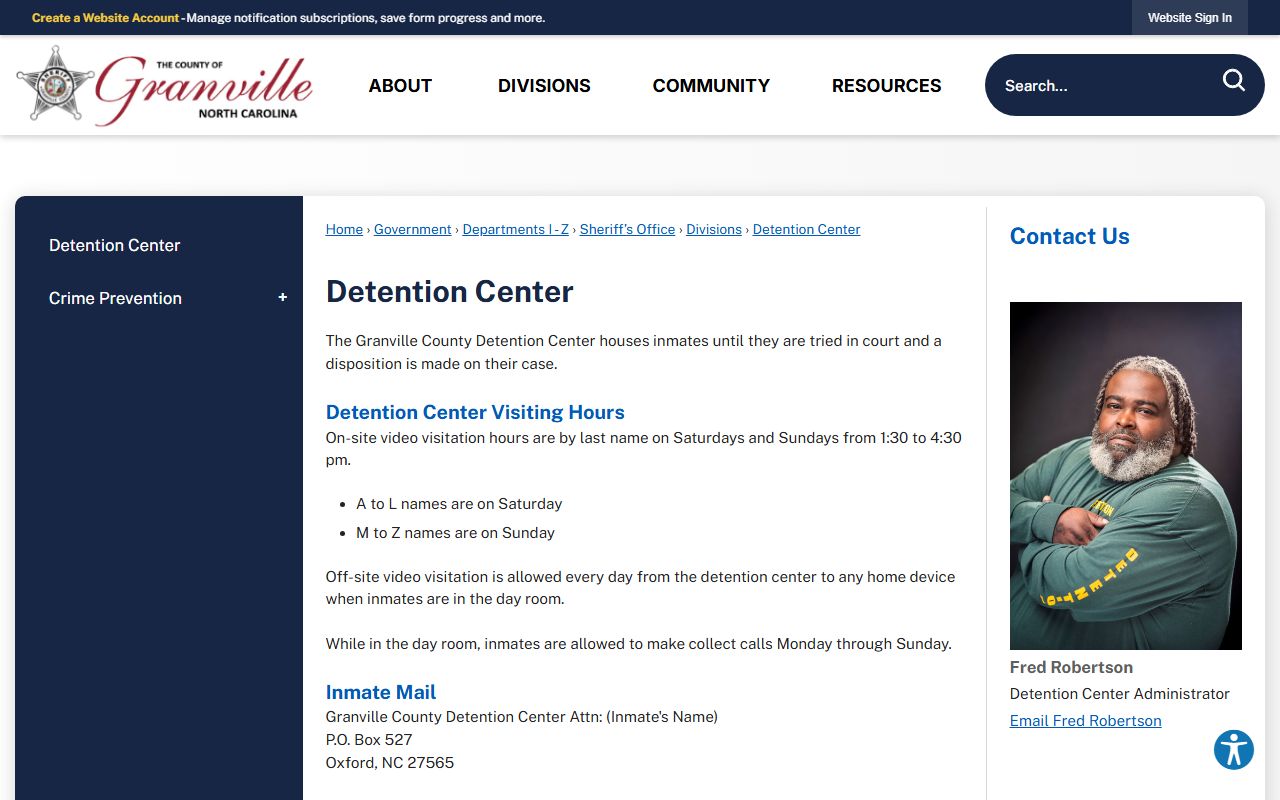
That local custody context helps separate an arrest or booking event from the final court outcome.
State Charge Lookup Fallbacks
Some Granville County arrest records lead to state correction records. The NCDAC criminal offender searches page describes state-level tools for prison, probation, parole, offender data, and SAVAN or VINE notification channels. The NCDAC Offender Public Information Search can search state prisoners, active probationers or parolees, inactive records, and historical state offender data. It is not a Granville County jail roster.
The NCDAC search can be useful after a Granville conviction results in state supervision or state prison. Search fields include offender status, last name, first name, middle initial, offender number, gender, race, ethnic group, birth date, birth date range, and age range. A person held only in the Granville County Detention Center may not appear there. For county jail status, call the detention center. For court charges, use Portal or the clerk.
The NCDAC criminal searches source is the statewide route for correction records after a local case reaches state custody or supervision.
State offender records can supplement a charge search, but they should not be used as a substitute for the Granville court file.
The NCDAC offender search interface is the direct public search for qualifying state offender records.
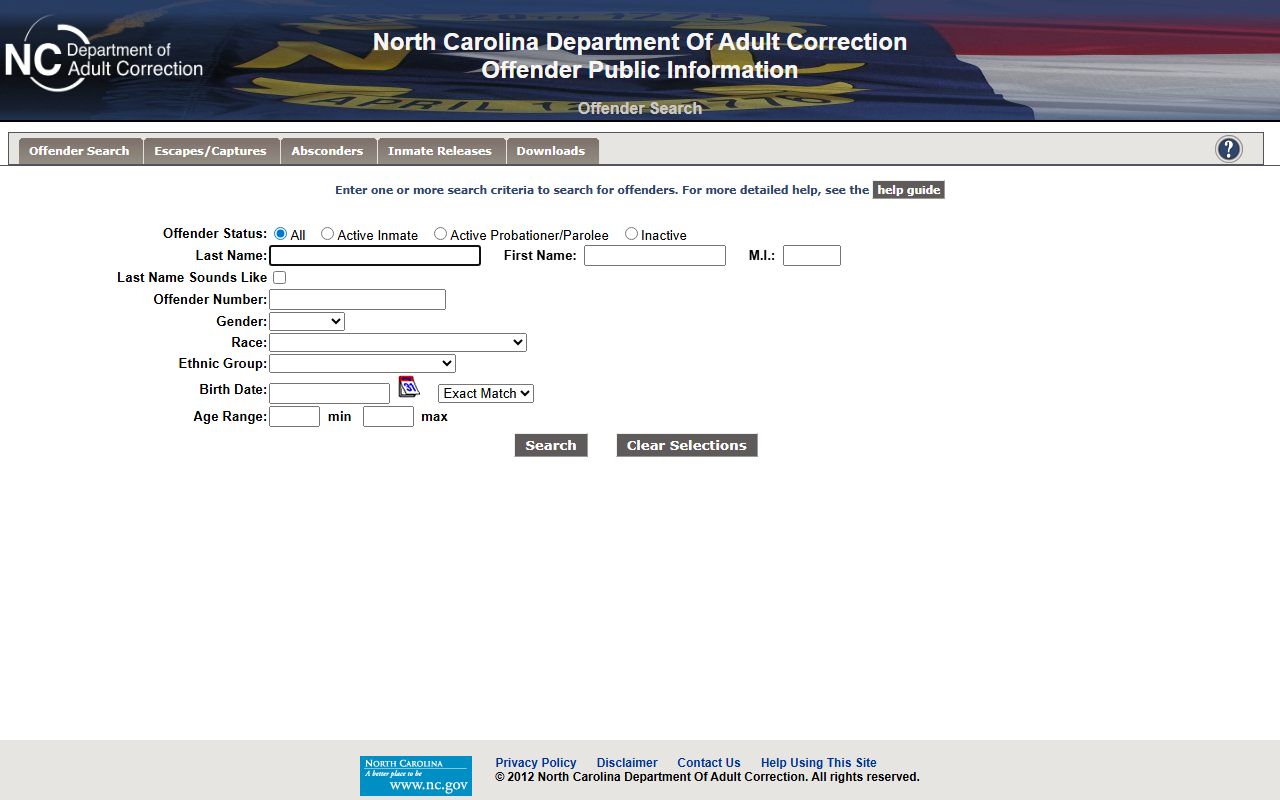
Use it for prison, probation, and parole status, then return to the court record for the charge history and disposition.
Granville County Access Limits
North Carolina public-access law supports inspection of ordinary court records, but not every charge or arrest-related file is public. G.S. 7A-109 covers clerk-maintained court records and inspection during regular office hours unless the law bars access. G.S. 132-6.2 addresses copy fees and confirms agencies are not required to create records that do not exist. Juvenile records, expunction files, sealed filings, protected addresses, and active investigation records may be withheld or redacted.
- Expunction
- A legal process that makes qualifying criminal records confidential under North Carolina law.
- Sealed record
- A file or entry blocked from ordinary public access by statute or court order.
- Redaction
- Removal of protected information such as Social Security numbers, minor details, or protected addresses.
- Disposition
- The recorded outcome of a charge, such as dismissal, plea, verdict, or judgment.
The NCDAC public-records page is a state correction records channel and notes the agency scope for offender information.
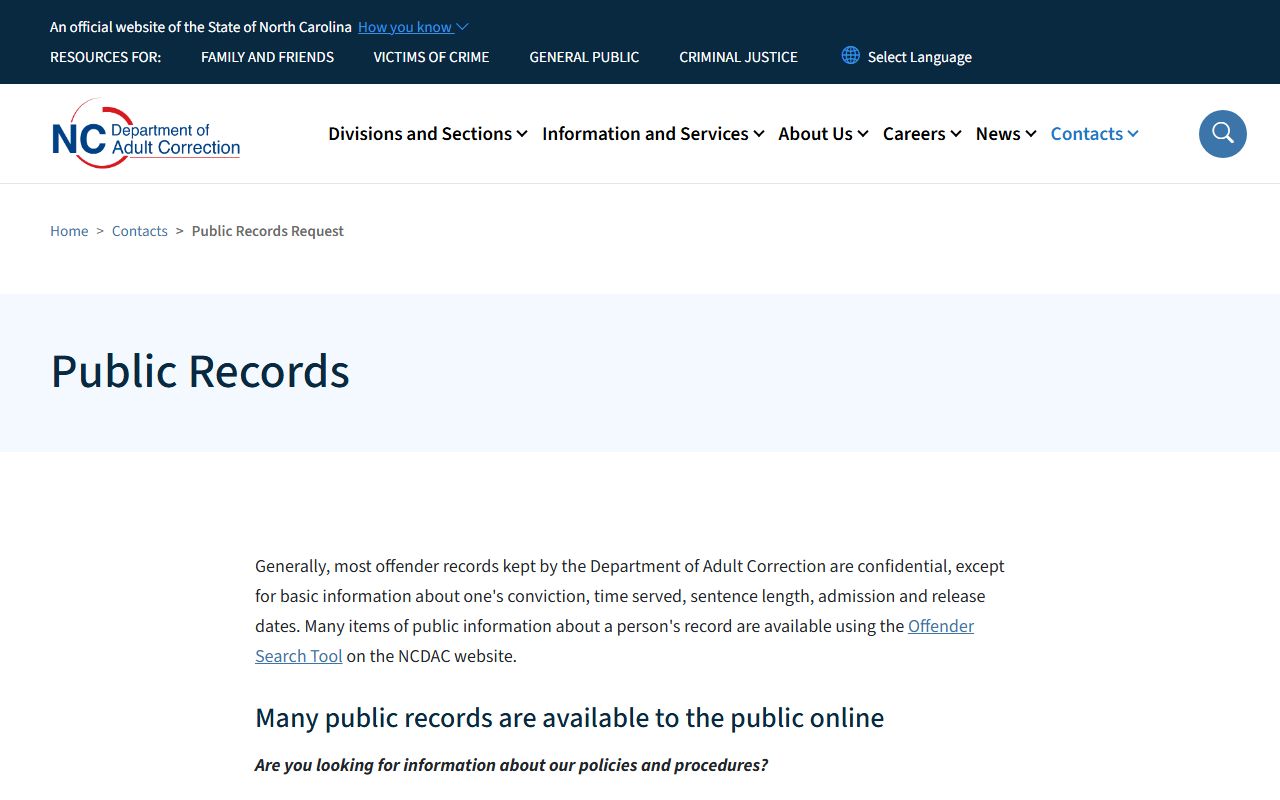
That distinction is important because county jail records, court files, and state correction files are held by different custodians.
Granville County Sealed Charge Records
Sealed and expunged records should not be treated as ordinary public charge records. North Carolina law restricts juvenile delinquency and abuse, neglect, or dependency records. G.S. 7B-3000 limits public inspection of juvenile court records, and G.S. 7B-2901 restricts abuse, neglect, and dependency records. G.S. 15A-151 makes expunction records confidential.
| Record Type | Public Treatment | Practical Effect |
|---|---|---|
| Ordinary adult charge | Often visible unless restricted | Check Portal and the clerk file. |
| Juvenile matter | Restricted by Chapter 7B | Do not expect ordinary public access. |
| Expunged charge | Confidential under expunction law | Not handled as a routine public record. |
| Active investigation material | May be withheld by agency | Use official request channels and expect exemptions. |
Important: Charge records are not consumer reports and should be verified with the official custodian before use in any regulated decision.